
CCM vs RPM contrasts care coordination with coaching with real-time health data monitoring. This allows physicians’ offices to make choices about how to incorporate CCM and RPM services to help manage their chronic patients better, take action on time, and prevent unnecessary hospital visits.
Chronic patients need assistance during intervals between their office visits. However, not all of them require such extensive assistance. Others need real-time vitals tracking. And many, especially higher-risk patients, benefit from both working together.
That’s why the conversation around CCM vs RPM matters. Understanding CCM vs RPM helps practices close different “care gaps” without overcomplicating workflows or enrolling patients into programs that don’t match their needs. And when you combine the right patients with the right approach, CCM and RPM services can become a practical, closed-loop model that improves outcomes and reduces avoidable utilization.
In this guide, we’ll break down what CCM and RPM are, how each works, who each is best for, and how to choose the right model, or combine them using CCM and RPM services.
Quick Definitions
What Is CCM (Chronic Care Management)?
Chronic Care Management is ongoing, non-face-to-face care coordination and support for patients with chronic conditions.
CCM focuses on:
- Care plans and goal setting
- Medication adherence support
- Patient education and follow-ups
- Coordination among providers, specialists, labs, and other community resources
Consider CCM as the framework which will ensure that patients remain supported and responsible between appointments.
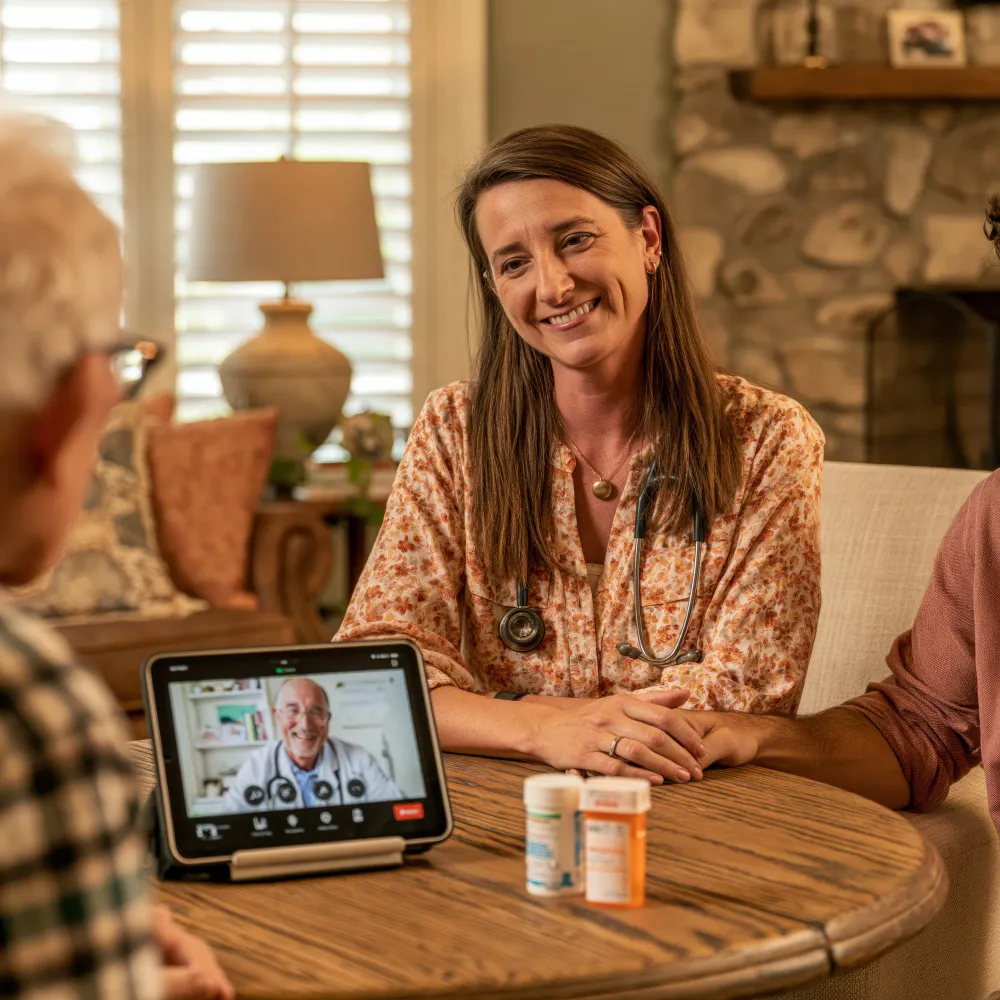
What Is RPM (Remote Patient Monitoring)?
Remote Patient Monitoring is the ongoing collection of patient health data (vitals and symptoms) from home using connected devices.
RPM focuses on:
- Trend tracking over time
- Dashboards and alerts for abnormal readings
- Early detection and timely intervention
Think of RPM as the visibility tool that shows what’s happening between visits, not just what’s happening in the exam room.
The Simplest Way to Remember CCM vs RPM
If you only remember one thing, make it this:
- CCM = care coordination and coaching
- RPM = data-driven monitoring
CCM supports the plan. RPM measures what’s happening between visits.
What CCM Includes (and What It’s Best At)
CCM is strongest when patients need consistent follow-through and coordination, not just clinical measurement.
CCM often includes:
- Personalized care planning and goal setting
- Medication management and adherence support
- Regular check-ins and patient education
- Care coordination across specialists, labs, referrals, and community services
CCM is best for:
- Patients with multiple chronic conditions
- Patients who need navigation and accountability
- Patients with social barriers (transportation, cost, low health literacy)
In the real world, CCM is often the difference between “we told the patient what to do” and “the patient actually did it.”
What RPM Includes (and What It’s Best At)
RPM is strongest when clinical risk is higher and vitals or symptoms can change quickly.
RPM often includes:
- Device onboarding and data capture (blood pressure, glucose, weight, pulse ox, etc.)
- Trend dashboards and alerts for abnormal readings
- Clinical review and outreach when readings change
RPM is best for:
- Patients with unstable vitals or frequent exacerbations
- Post-discharge monitoring to reduce readmissions
- Patients who benefit from tighter clinical oversight between visits
RPM helps teams catch deterioration earlier, before it turns into an urgent visit or hospitalization.
Key Differences Between CCM vs RPM
1. The Primary Goal
- CCM enhances follow-through, coordination, and self-management
- RPM increases visibility of patient condition and enables early intervention
2. The Type of Work Involved
- CCM is relationship and workflow-driven (care plans, outreach, education)
- RPM is data and device-driven (readings, alerts, trend review)
3. The Patient Experience
- CCM feels like ongoing support and coaching
- RPM feels like structured check-ins through devices and monitoring
4. The Best-Fit Patient Profiles
- CCM: complex, multi-condition, needs guidance and navigation
- RPM: higher clinical risk, needs frequent physiological monitoring
Which Patients Are Best for CCM? (Quick Checklist)
CCM is often a strong fit when you see:
- 2+ chronic conditions
- Medication complexity
- Frequent missed appointments or adherence issues
- Need for education, coaching, and care coordination
- Social barriers impacting care
If the main issue is “patients aren’t following through,” CCM is usually the first lever to pull.
Which Patients Are Best for RPM? (Quick Checklist)
RPM is often a strong fit when you see:
- Hypertension, diabetes, CHF, COPD (especially uncontrolled)
- Recent discharge or history of readmissions
- Symptoms that change quickly and need trend tracking
- Need for frequent vitals monitoring to adjust treatment
If the main issue is “we don’t have visibility until it’s too late,” RPM is usually the first lever to pull.
When Combining CCM and RPM Services Makes the Most Sense
Here’s the simplest way to think about it:
RPM provides the data. CCM provides the support system around it.
RPM can flag deterioration early, but someone still has to respond, educate, coordinate, and follow through. That’s where CCM strengthens the model.
Combining CCM and RPM services makes the most sense for:
- High-risk chronic patients
- Post-discharge patients with complex care plans
- Those patients that require both monitoring and behavioral intervention
Together, these CCM and RPM services provide a closed-loop process of care:
monitoring → intervention → assistance → monitoring
Central Health Solutions is a case of a care management model that always focuses on a structured approach and effective follow-up, which is particularly important when it comes to the combination of monitoring and assistance.
Questions to Ask Before Choosing a Program (Provider-Focused)
Prior to patient enrollment or vendor selection, consider the following questions:
- What is our target outcome (e.g., readmissions, control, adherence)?
- Are there enough people and processes in place to respond to RPM alerts?
- Are there any patient barriers requiring CCM-type services?
- What tech tools integrate with our existing systems?
- How will we measure success (KPIs)?
A program that looks great on paper can fail if the workflow isn’t realistic.

Conclusion: The Right Model Depends on the Patient, Not the Trend
CCM supports long-term behavior change and coordination. RPM supports early detection and clinical visibility. The best approach is patient-matched, and often a combination of both.
Understanding CCM vs RPM helps practices deploy CCM and RPM services where they’ll have the biggest impact, for the patients who actually need them.
FAQs
1) Can a Patient Qualify for Both CCM and RPM at the Same Time?
Yes. Many high-risk chronic patients benefit from both, especially when they need monitoring plus coaching and coordination to stay consistent.
2) What’s the Biggest Operational Challenge With RPM?
Alert management and follow-up workflows. RPM works best when teams have clear protocols for who reviews data, when to escalate, and how to document actions.
3) Is CCM Helpful if a Patient’s Vitals Are Stable?
Yes. CCM isn’t only about vitals, it’s about adherence, education, coordination, and reducing gaps that lead to long-term complications.
Match the Model to the Patient, Not the Trend
Use CCM and RPM services strategically, so the right patients get the right mix of coaching, coordination, and monitoring, and your team sees better outcomes with less chaos.