Transition Care Management

Light grey abstract brushstroke background texture
A light gray rectangular surface with subtle diagonal brush stroke textures in varying shades of white and gray, set against a solid black background. The texture resembles a painted canvas or brushed paper.

Transition Care Management Services - Transition From Hospital To Home Care

Transition Care Management refers to the coordination and continuity of health care during a movement from one healthcare setting to either another or to home. We at CHS offer trusted transitional care management services to ensure a smooth transition from hospital to home care, focusing on reducing readmissions and improving patient outcomes. Aligned with value-based care transition, we provide personalized support to enhance care continuity and promote better long-term health results.
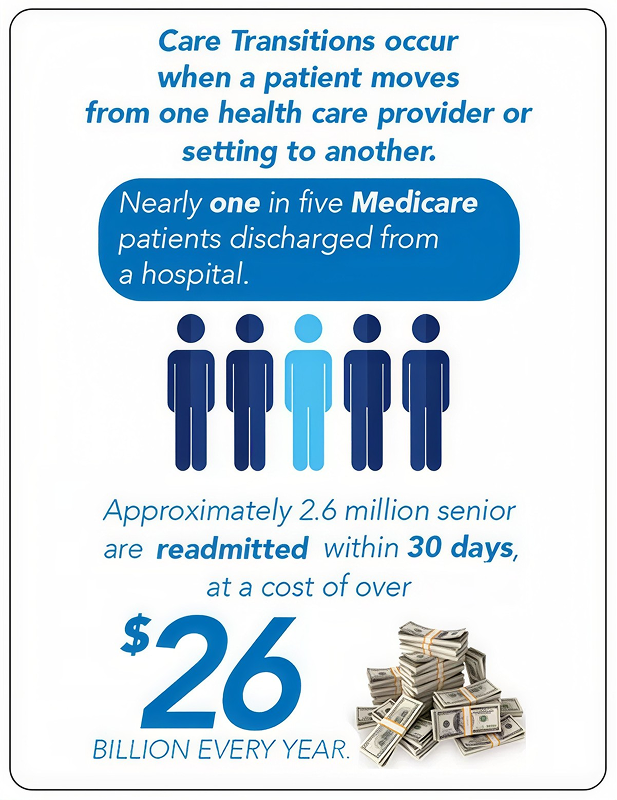
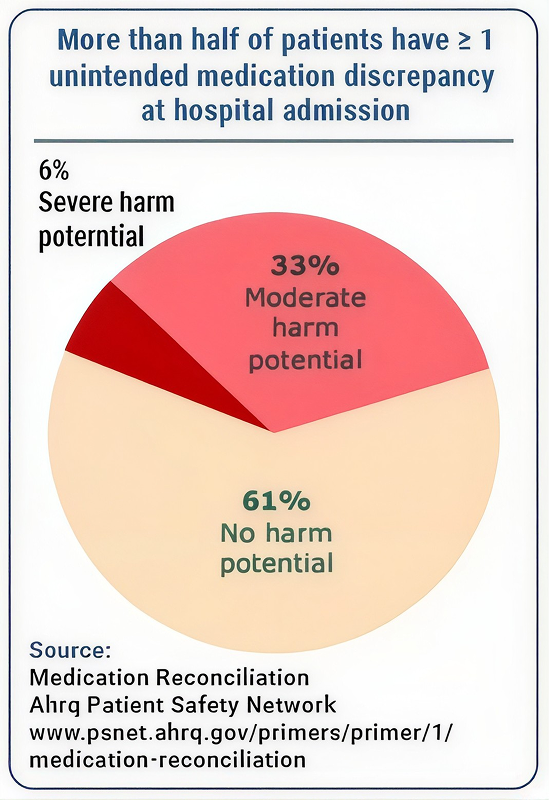
Infographic explaining Care Transitions, defined as when a patient moves between providers. It states nearly 1 in 5 Medicare patients are discharged from a hospital, illustrated by one light blue icon among four dark blue icons. It notes approximately 2.6 million seniors are readmitted within 30 days, costing over $26 billion every year. Pie chart showing unintended medication discrepancy rates at hospital admission. Data indicates 61% have no harm potential, 33% moderate harm, and 6% severe harm potential. Source: AHRQ Patient Safety Network.

Transition care management aims to ensure the successful transition of patients from hospitals, nursing homes, and other healthcare facilities back to their community setting, including rest homes, domiciliary care, assisted living facilities, or home care, leading to the best possible health outcomes for patients. It involves reducing readmissions during the 30-day transition care management period, which begins when the patient is discharged from the acute care setting and continues for the following 29 days.

Transition care service providers contact patients within 2 business days of discharge from the acute care setting and address patient status and needs following scheduled follow-up care. This includes transition care support for chronic conditions, and contact may be made via email, telephone, or in person for care coordination and billing purposes. We also offer customized transition care integration services to ensure each patient’s unique needs are met.

What CHS’s Transition Care Management Portal Can Do For You

Whether your patient needs transition care monitoring solutions from nursing home to primary care, transitional care from hospital to primary care, or from hospital to home, you can use our transitional care management services. Using the platform, you can enroll patients, schedule and document follow-up calls, and create a care plan.

Our plan objectives

    • Reduce hospital readmission
    • Maximize adherence
    • Reduce complications
    • Improve patient overall health conditions and reduce adverse events
    • Improve communications between providers and patients
    • Improve satisfactions
    • Schedule in-person appointments
    • Reach more patients by extending care remotely
    • Establish contact with patients within 2 days of their discharge from transition care from hospital to home
    • Simplify your workflow; helping you focus on expanding your business
    • Provide dashboard with real-time information about patient’s health. It makes monitoring their progress over the 30-day post-discharge period easier
Doctor giving presentation to team of interim doctors at conference room
Our transition care monitoring solutions are performed by clinical pharmacists. With our services, you will get:

Our Value Based Care Transition Plan Will Perform Following Services:

    • All services are performed by clinical pharmacists
    • Complete and accurate medication reconciliation
    • Post discharge support including communication with primary care providers, patients and caregivers
    • Patient counseling and assistance to achieve best medication therapy outcome
    • Post primary care transition of care visit medication reconciliation and support
    • Follow Up calls to prevent readmission and monitor compliance
    • Communications with hospital and providers to close any therapy gaps
    • High-risk screening tools to avoid complications
    • Follow-up calls to family members to reduce hospital readmission and monitor compliance

With Our Transition Care Management Solution, You Can:

    • Fill the gaps in care during the time of initial patient stay, reducing hospital readmissions
    • Maximize adherence
    • Reduce complications
    • Improve patient overall health conditions and reduce adverse events
    • Improve communications between providers and patients
    • Get satisfactory post-discharge care
    • Lower care costs and generate revenue through easy-to-access billing reports
    • Control primary care costs and the cost of emergency care facilities for your patients
Book an Appointment

Giving Transitioning Patients the Care They Deserve

At CHS, we understand how critical the 30-day post-discharge period is for transitioning patients, especially older adults with multiple chronic conditions who require continuous care as they move between care settings. It is essential to deliver quality care to patients during this time. Our HIPAA-compliant portal is specifically designed for managing patients transitioning from acute care to other care settings or home care. It automates workflows and streamlines transitional care, reducing the time and effort required to manage the entire process manually.

Associated CPT Codes by

CMS Remote Therapeutic Monitoring

CPT Code 99495

It includes: • Communication within 2 days of discharge • At least moderate medical decision-making • Face-to-face visit, within 14 calendar days of discharge

Average payment – $215

CPT Code 99496

It includes: • Communication within 2 days of discharge • At least moderate medical decision-making • Face-to-face visit, within 7 calendar days of discharge

Average payment – $295

Note: Payments may vary by location. Please refer to cms.gov for more details.