
Selection of appropriate remote patient monitoring services can assist clinics in achieving patient engagement, chronic disease management, and success via connected monitoring, clinical escalation, and telehealth. A successful RPM program entails technological capability, workflow, patient assistance, and performance.
Remote patient monitoring can be powerful. It can improve outcomes, reduce readmissions, and support chronic care, but only when the program is well-run. And here’s the part many practices underestimate: RPM isn’t just “ship devices and watch numbers.” It’s devices, onboarding, staffing, workflows, documentation, patient engagement, and clinical escalation, all working together.
That’s why choosing the right remote patient monitoring services matters. The right remote patient monitoring services partner doesn’t just give you hardware; they help you run a program that patients will actually use, and clinicians can actually trust. In this guide, we’ll cover the key questions to ask before you choose patient monitoring services, and what to look for in a partner that can support telehealth monitoring at home through a connected remote patient monitoring telehealth model that feels like one care loop, not a bunch of disconnected tools. We’ll also talk about what “good” looks like when you want scalable remote monitoring telehealth workflows.
Quick Clarity: RPM Vs Telehealth (And How They Work Together)
Let’s simplify the terms, because they get mixed up a lot:
- RPM = ongoing data collection and trend monitoring between visits
- Telehealth = a remote visit (video, phone, or messaging)
Many programs combine both into a hybrid model. And that’s usually where the magic happens, because remote patient monitoring telehealth programs create a care loop:
monitor → intervene → monitor
In a strong setup, RPM flags a trend, telehealth handles the follow-up, and the patient stays supported without unnecessary in-person visits.
First, Define Your Goals (So You Choose The Right Patient Monitoring Services)

Before you evaluate vendors, get clear on what you’re trying to achieve. Otherwise, every demo will sound “great,” but you’ll end up with a program that doesn’t match your reality.
1) What Outcomes Matter Most?
Common goals include:
- reducing readmissions
- improving chronic disease control
- increasing adherence to meds and care plans
- expanding access with remote patient monitoring telehealth workflows
2) Which Patient Populations Are You Targeting?
Be specific. For example:
- CHF, COPD, diabetes, hypertension
- post-discharge patients
- high-risk seniors
- patients with frequent ER utilization
Different populations require different thresholds, outreach cadence, and engagement strategies.
3) What Level Of Support Do You Need?
Do you want a platform only, or do you want a full service solution? Most practices require more than just technology.
Key Questions for A Service Provider (The Essential List)
These questions form the criteria for evaluating the service provider.
1) Program Design and Clinical Oversight
This is where safety and trust are built.
Ask:
- Who reviews patient data (RN, care coordinator, physician)?
- What is the clinical escalation process for abnormal readings?
- What are response time expectations?
- How do you avoid alert fatigue?
A good partner should be able to explain escalation like a playbook, not like a vague promise.
2) Patient Eligibility and Enrollment
If enrollment is clunky, adoption will be low, even if the tech is great.
Ask:
- How do you identify and qualify patients?
- Do you provide scripts/workflows for patient consent and enrollment?
- What does onboarding look like for low-tech patients?
Low-tech onboarding isn’t a “nice to have.” It’s often the difference between a program that scales and one that stalls.
3) Devices and Data Capture
Devices are the visible part of RPM, but the details matter.
Ask:
- What devices are included (BP cuff, scale, glucometer, pulse ox, wearables)?
- Are devices cellular, Wi-Fi, or app-based?
- What happens if a patient misses readings?
- How do you handle device replacement and troubleshooting?
A strong program has a plan for missed readings that doesn’t shame patients, but also doesn’t ignore risk.
4) Patient Engagement and Adherence Support
This is the part that separates “device distribution” from real care support.
Ask:
- What reminders and nudges are included?
- Do you offer coaching or education?
- How do you improve long-term adherence to readings and care plans?
Strong patient monitoring services include engagement, not just devices. If the vendor can’t explain their adherence strategy, expect drop-off after the first few weeks.
5) Telehealth Integration (The Hybrid Model)
If you want a connected program, you need more than two tools sitting side by side.
Ask:
- Do you offer telehealth visits as part of the program?
- How do RPM alerts trigger a telehealth follow-up?
- How do you support telehealth monitoring at home workflows for chronic patients?
- Does the experience feel like one connected remote monitoring telehealth program, or two separate systems?
The goal is that a patient doesn’t feel bounced around. They should feel like the care team is watching trends, checking in, and adjusting the plan in a coordinated way.
6) Workflow Fit for Your Practice
RPM fails when it adds chaos to already-busy teams.
Ask:
- How do you route tasks to staff (work queues, tasking, escalation)?
- What does documentation look like?
- Can you customize thresholds and care pathways by condition?
- How much staff time is required weekly?
A great vendor will talk about workflow fit as much as they talk about features.
7) Reporting and Performance Tracking
If you can’t measure it, you can’t improve it.
Ask:
- What KPIs do you report? (enrollment rate, adherence rate, alert volume, time-to-intervention)
- Do you track readmissions and ER visits when available?
- Can you break reporting down by provider, location, and condition?
Reporting is what turns RPM into an operational program instead of a “pilot that never ends.”
8) Compliance, Privacy, and Security
RPM involves PHI, so governance matters.
Ask:
- Do you have HIPAA-safe handling and audit trails?
- What are your data access controls and secure messaging practices?
- How do you handle patient consent and communication policies?
You want clear answers, not marketing language.
9) Implementation and Support
Even the best platform fails with weak implementation.
Ask:
- How long does implementation take?
- What training is included for staff and patients?
- What does ongoing support look like (ticketing, live help, account manager)?
- What are service-level expectations?
Implementation is where adoption is won or lost.
10) Pricing and Contracting (Ask For Clarity)
RPM pricing can vary a lot depending on what’s included.
Ask:
- What is included in the monthly cost?
- Are devices included or billed separately?
- Any setup fees, minimums, or long-term contracts?
- How do you price full-service vs platform-only remote patient monitoring services?
If pricing is unclear, it usually becomes painful later.
Central Health Solutions is an example of a partner model that typically emphasizes workflow clarity, measurable outcomes, and scalable patient support.
Red Flags to Watch for
Be cautious if you see:
- no clear escalation protocol or response-time expectations
- poor onboarding support (especially for older adults)
- no adherence strategy (just “send devices”)
- limited reporting or vague outcomes
- telehealth and RPM feel disconnected (weak remote patient monitoring telehealth experience)
If a vendor can’t explain how they prevent drop-off and manage escalation, you’re not buying a program, you’re buying devices.
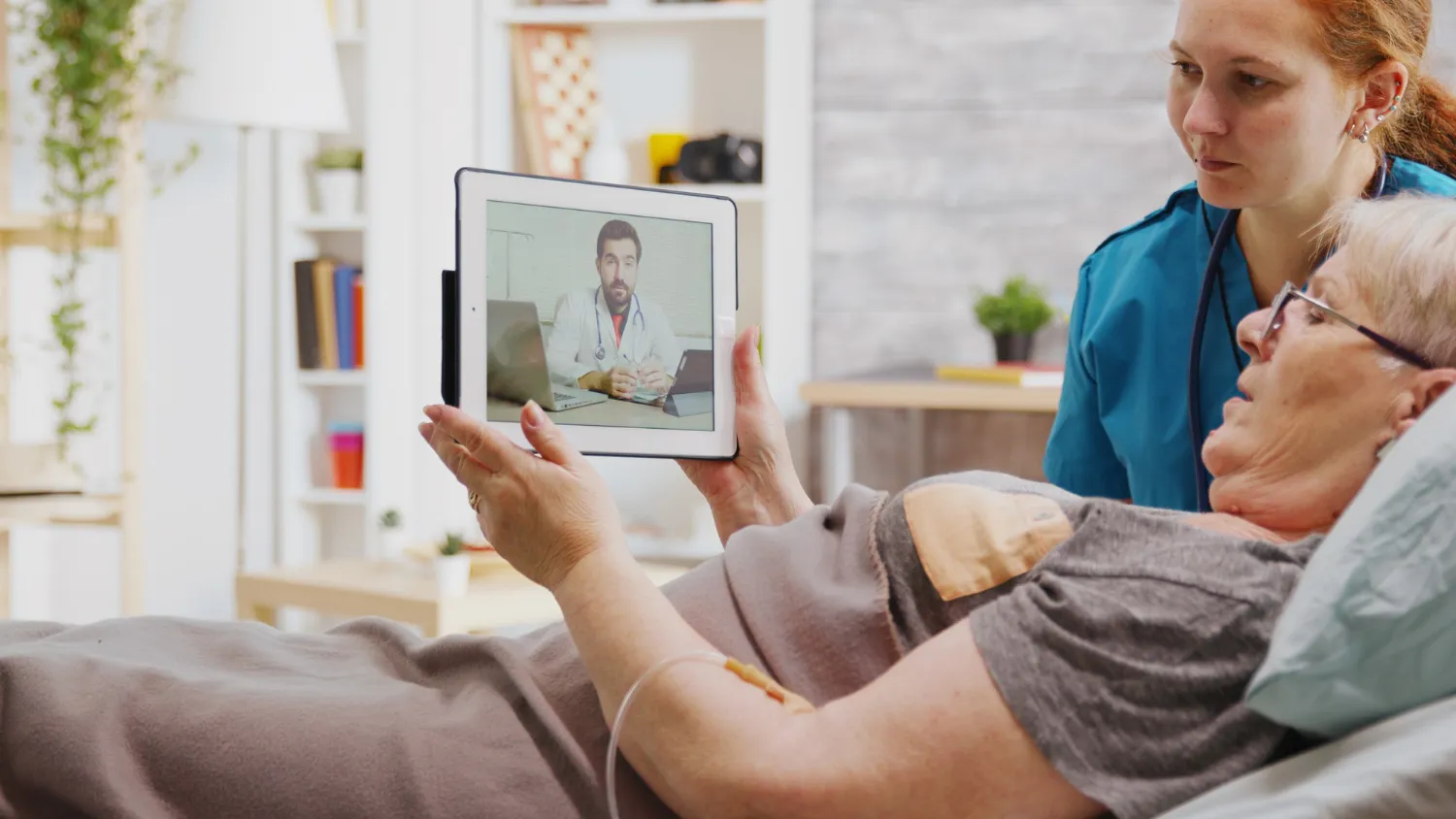
Conclusion: Choose A Partner That Delivers Outcomes, Not Just Devices
A good solution integrates technology, process, clinician involvement, and patient engagement. By asking the right questions, you will be able to select remote patient monitoring services that will suit both your practice and the needs of your patients.
When good remote patient monitoring services are combined with telehealth monitoring at home, you have the ability to create a scalable and proactive healthcare model using remote monitoring telehealth.
FAQs
What’s The Difference Between RPM And Telehealth?
RPM is ongoing monitoring between visits. Telehealth is a visit (video/phone/message). Together, they create a loop: monitor, intervene, monitor.
Do RPM Programs Work For Older Adults?
Yes, if onboarding is strong and devices are simple (often cellular-enabled). Ask vendors how they support low-tech patients and troubleshoot devices.
What KPIs Should We Track For RPM Success?
At minimum: enrollment rate, adherence rate, alert volume, time-to-intervention, and outcomes like ER visits or readmissions when available.
Reduce Readmissions With Better Follow-Through
Telehealth monitoring at home paired with structured outreach and clear escalation paths.